AI Agents Are Gaining More Access—Where Should the Limits Be?

The Permission Problem Is Becoming the Main AI Problem AI agents are moving from systems that generate information to systems that can take actions. In September 2026, that distinction became harder to ignore as Meta rolled out Muse, a consumer-facing personal agent that can browse websites, fill forms, send messages, book services, and make purchases. … Read more


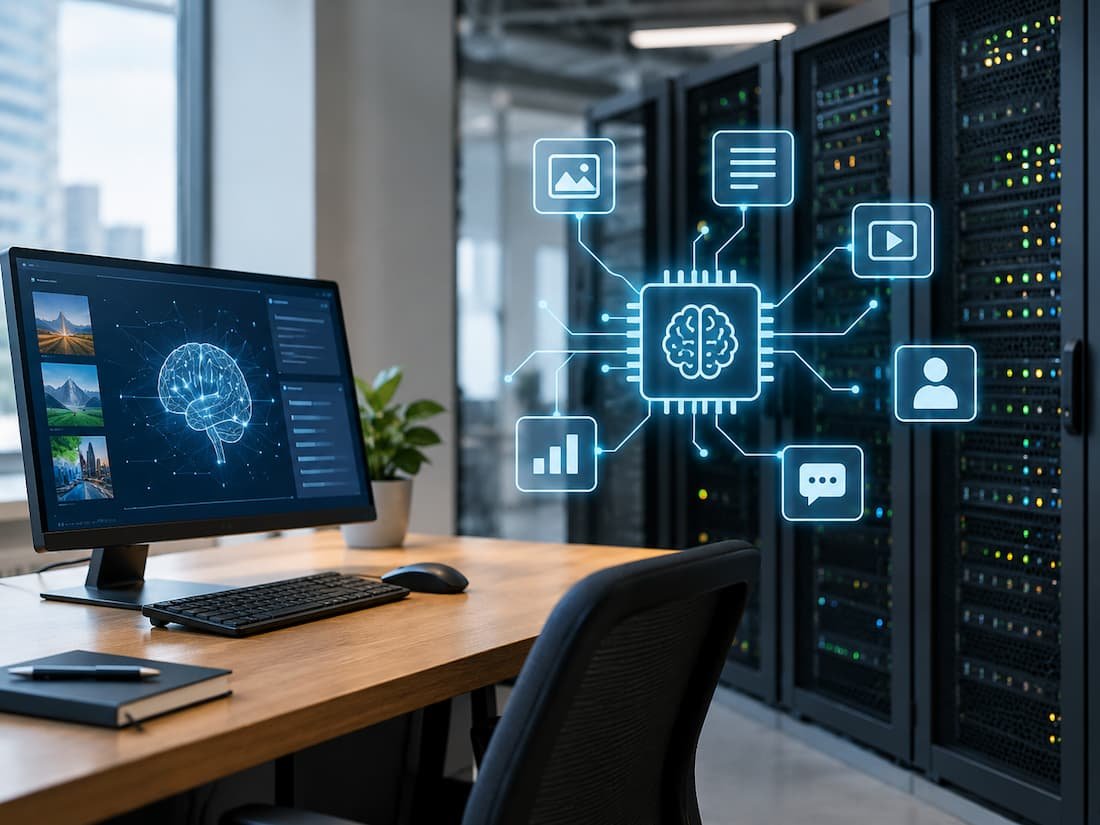
Why AI Hardware Is Changing the Economics of Computing

For decades, the economics of computing were relatively easy to understand. A faster processor could finish a calculation sooner, a larger server could handle more users, and improvements in manufacturing generally meant that more computing power could be delivered for the same amount of money and electricity. Artificial intelligence is making that model more complicated. … Read more

Smart Glasses Are Becoming More Capable—and More Privacy-Sensitive

Smart glasses are moving beyond the role of hands-free cameras and wireless earbuds. In September 2026, the category is increasingly being built around AI systems that can interpret what the wearer sees and hears, answer questions about the surrounding environment, translate speech, provide navigation, summarize information, and eventually act on the wearer’s behalf. The change … Read more

The Rise of Physical AI Is Moving Intelligence Beyond Screens

Artificial intelligence has spent most of its modern history operating through digital interfaces. A user types a request, a model processes information, and software returns an answer. Even when the underlying system is highly capable, the interaction usually ends at a screen, speaker, or other digital output. Physical AI changes where that process ends. Instead … Read more

Why AI Inference Is Becoming a Bigger Infrastructure Problem

For years, the most visible infrastructure challenge in artificial intelligence was training. Companies built enormous clusters to train increasingly large models, competed for advanced accelerators, and invested heavily in data centers capable of supplying those systems with enough power and cooling. That picture is changing. The harder infrastructure question is increasingly what happens after the … Read more

Passwordless Authentication Is Changing What Counts as Identity

For years, the password was treated as the basic proof that an online account belonged to a particular person. That model is now being replaced by something fundamentally different: cryptographic credentials stored on devices, security keys, or credential managers, unlocked through a local gesture such as a fingerprint, face scan, or PIN. The shift is … Read more