The Heat Problem Changing How Data Centers Are Designed
When people think about a data center, the visible story is usually about computing: servers, GPUs, storage, networking and the software running on top of them. The less visible story is what happens to the energy those machines consume. Almost all of the electrical power used by computing equipment eventually becomes heat. That heat must … Read more


What Your Router Does Before Your Internet Request Reaches the Web

When you open a website, it is easy to imagine your computer sending a request directly to that website’s server. In reality, your request usually passes through several layers of networking before the destination ever sees it. Your router sits at an important boundary in that process. It connects your local network to another network, … Read more

Why the Website You Visit May Not Come From One Server

When you type a website address such as example.com into a browser, the visible experience suggests a simple relationship: your browser asks for the website, and one server sends it back. Modern websites rarely work that way. The domain name may resolve to infrastructure operated by a content delivery network (CDN), a load-balancing service, a … Read more

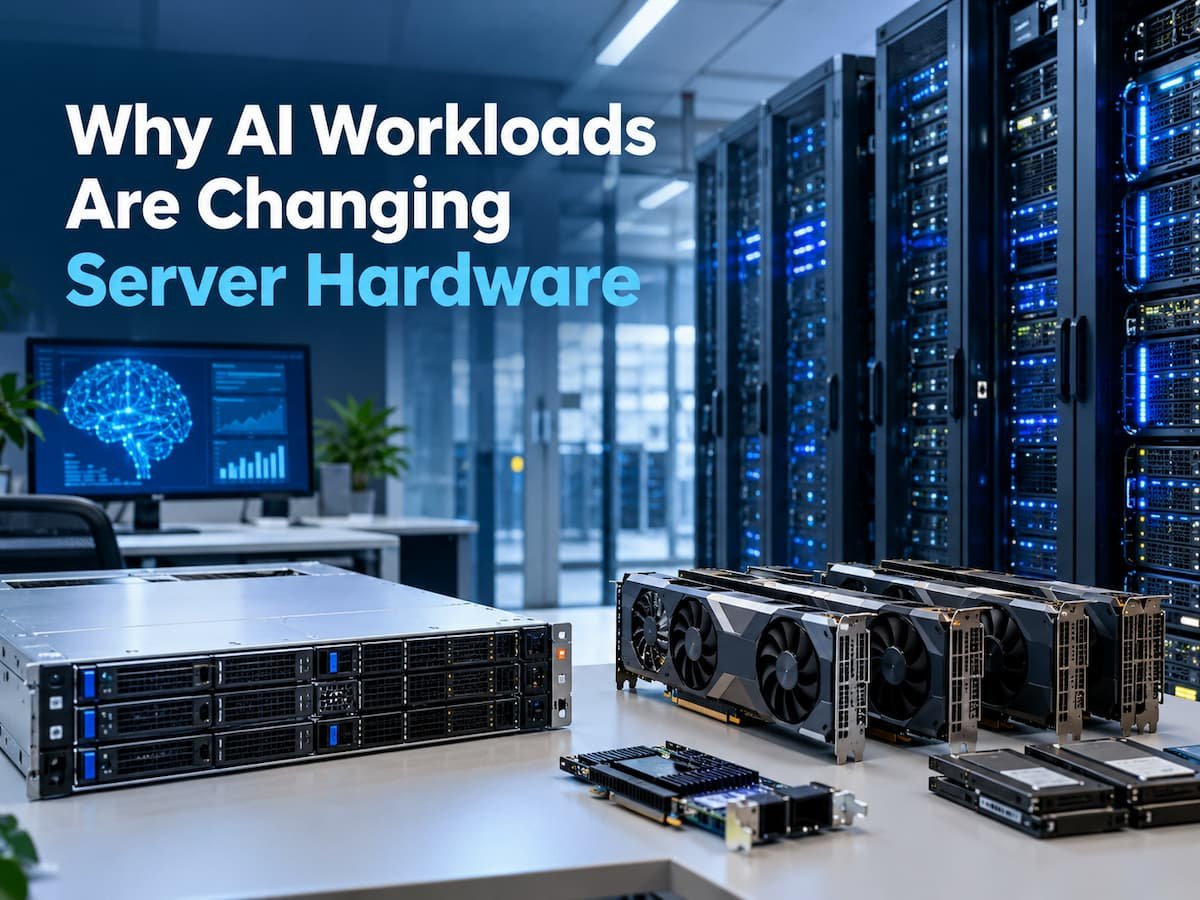
Why AI Workloads Are Changing Server Hardware

When an ordinary web application receives a request, the server may spend much of its time moving through familiar layers: CPU instructions, system memory, storage, network interfaces, and software services. Many workloads consist of relatively small bursts of computation, followed by waiting for data. AI workloads change that balance. Training a large model can keep … Read more

The Sequence of Events Behind a Computer Startup

Pressing a computer’s power button appears to trigger one simple action: the machine turns on, a logo appears, and eventually the operating system loads. Underneath that short visual sequence is a chain of electrical, firmware, hardware, security, storage, and operating-system operations. The important detail is that the operating system is not the first software that … Read more

What Happens Between Typing a Website Name and Seeing the Page

Most people experience the web as a single action: type a website name, press Enter, and a page appears. Technically, that action starts a chain of operations involving URL parsing, local caches, DNS resolution, IP routing, transport protocols, encryption, HTTP, servers, content delivery networks, and finally the browser’s rendering engine. There is no single “website … Read more

How Digital Provenance Creates a Traceable History

A software package can look like a single file when it reaches your computer. A photograph can appear to be a single image. A dataset can arrive as one downloadable archive. In reality, each may have passed through a chain of people, systems, transformations, and automated processes before reaching you. The difficult question is often … Read more